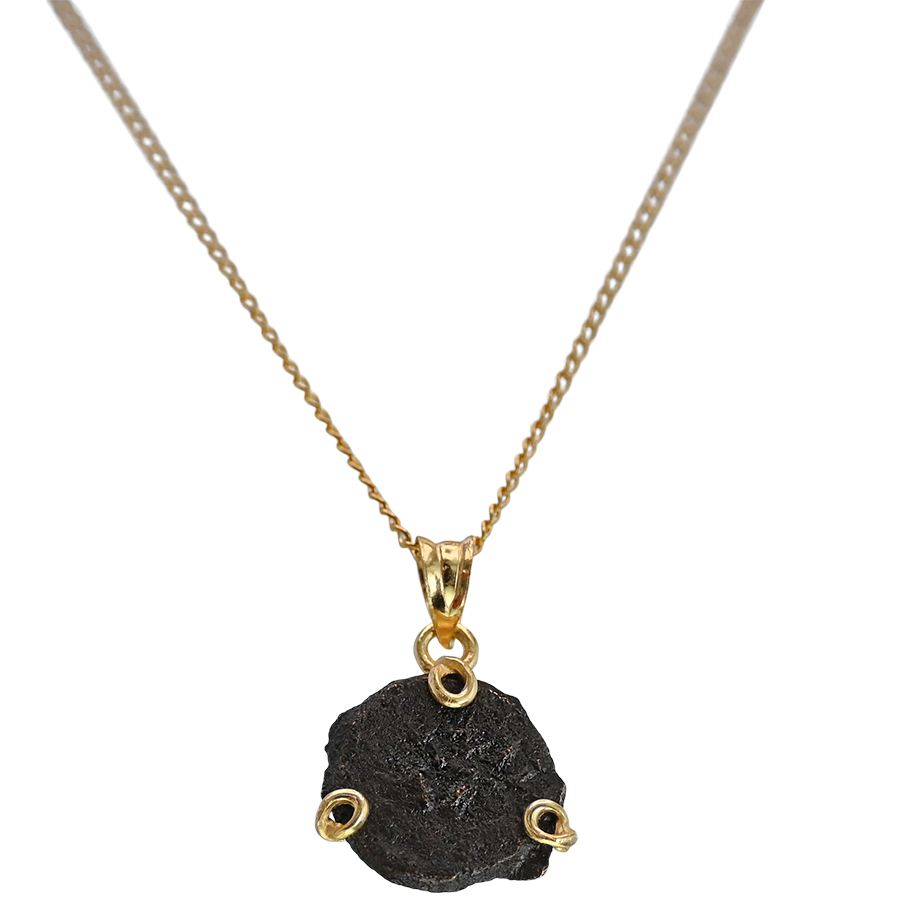
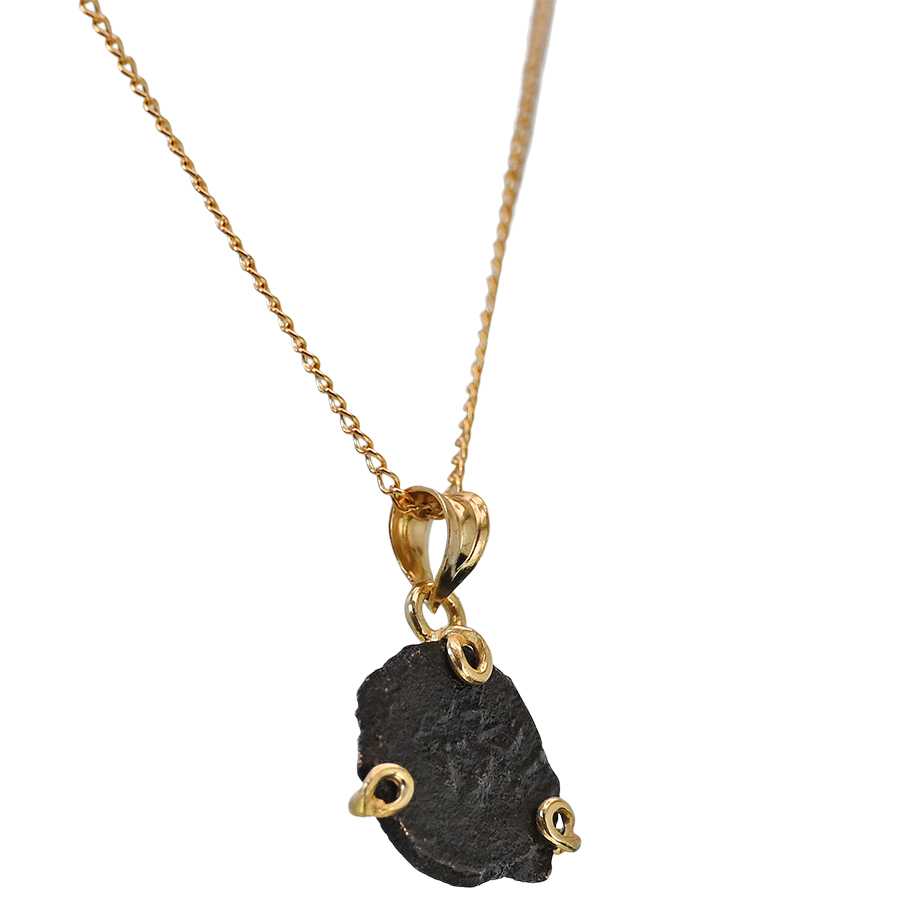
Ancient Bronze Widow’s Mite Coin Pendant Set in 18K Gold, 2nd Century BCE- 1st Century CE
At the heart of this pendant is an authentic ancient coin known as the “Widow’s Mite,” a reference drawn from Biblical account. In the story, a poor widow offers two small coins to the temple treasury. A seemingly insignificant value, yet the gesture is praised as the greatest gift of all, for the woman gave not from abundance, but from all she had. Over centuries, the “Widow’s Mite” has come to symbolize humility, generosity, and the profound worth of even the smallest offering when given with sincerity.
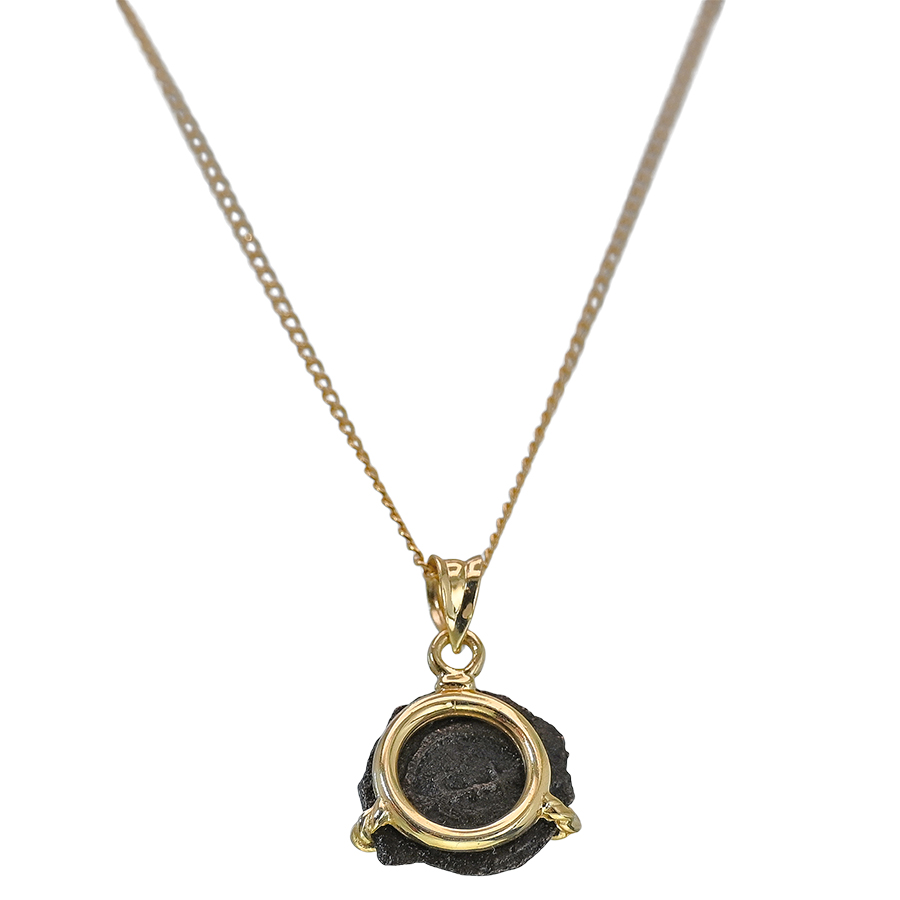
Coins of this type were struck most commonly during the Hasmonean and early Roman periods, and are generally dated from approximately the 2nd century BCE through the 1st century CE. They typically feature an anchor or star, were often crudely struck, modest in size, and simple in design, reflecting their role as everyday currency, yet their enduring legacy has elevated them into objects of historical and spiritual resonance.
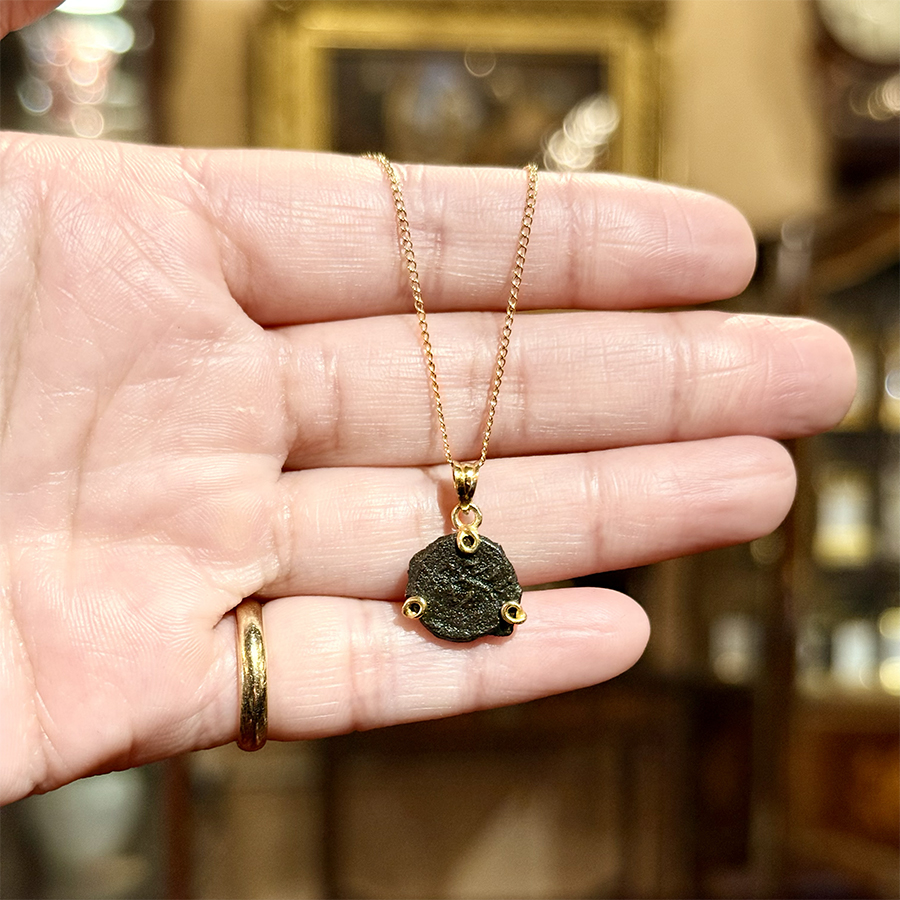
Here, the coin’s softly worn surfaces and irregular contours speak to over two thousand years of passage through countless hands and lives. It is thoughtfully preserved within an 18K yellow gold setting, designed to honor its age while transforming it into a wearable artifact. The pendant is suspended from a 14K yellow gold curb chain measuring 15.25 inches, allowing it to rest gracefully at the neckline.
Coin, 2nd Century BCE -1st Century CE
Modern Set in 18K Yellow Gold
Chain, 15.25 inches