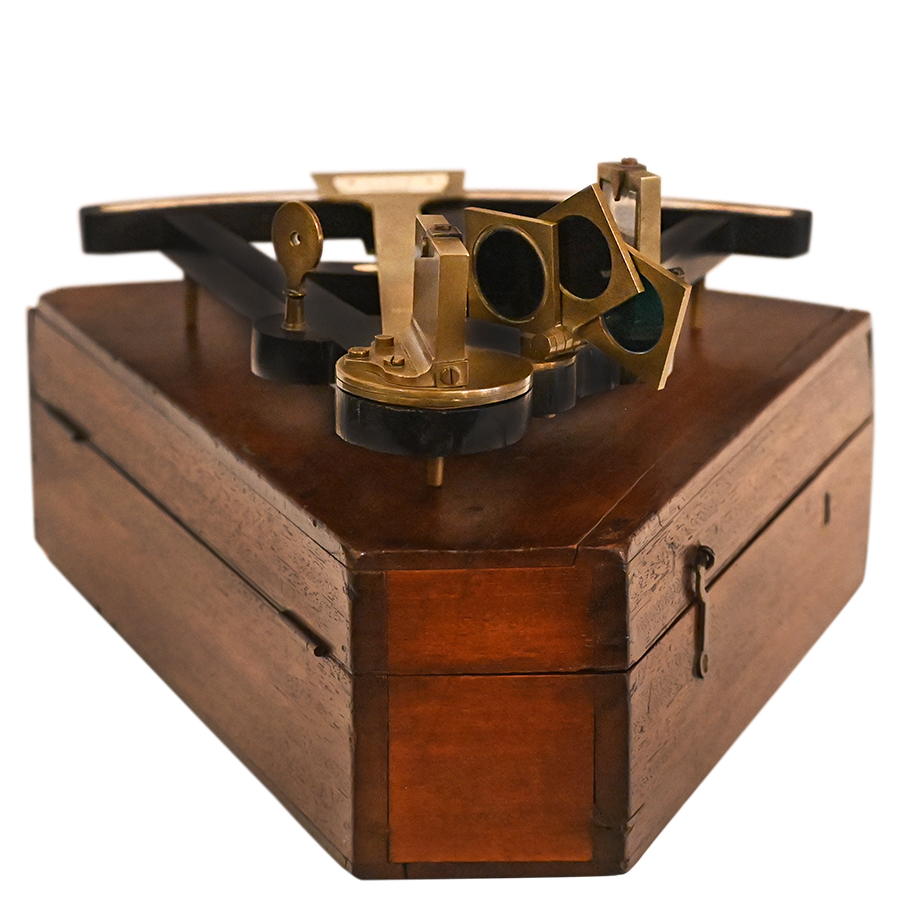
English Navigator’s Octant in Original Mahogany Case
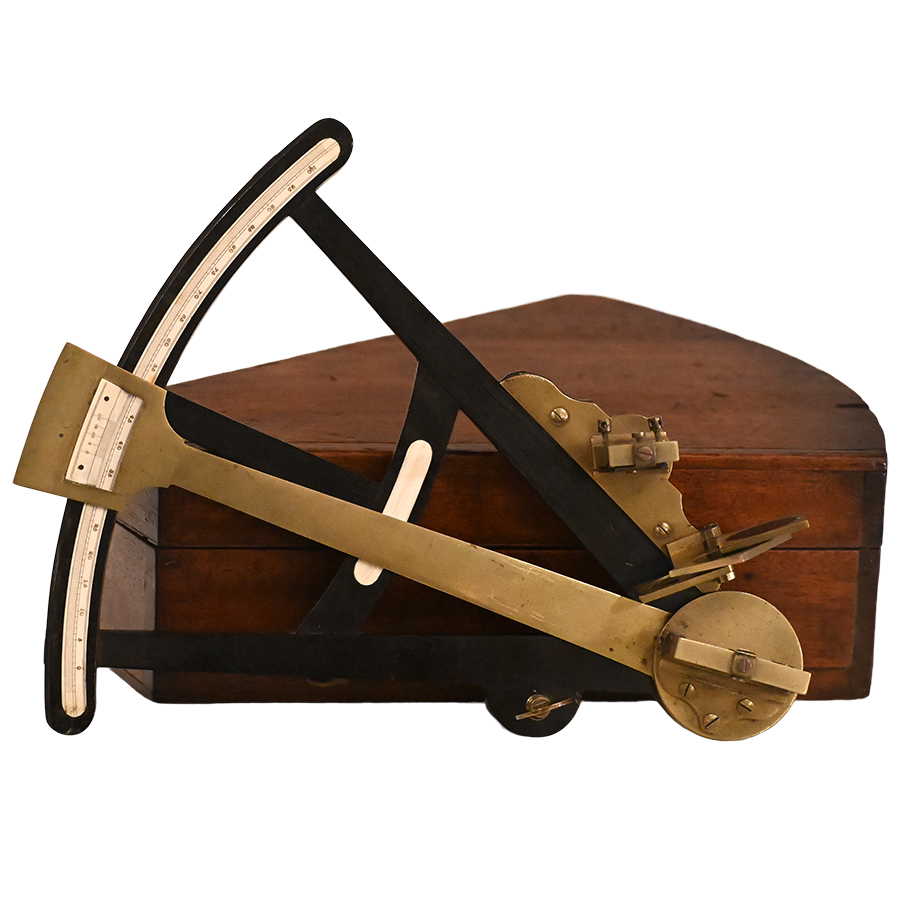
An essential instrument of maritime navigation in its era, this English octant dates to the early 1800s and reflects the precision craftsmanship on which generations of navigators depended. Before the widespread adoption of modern navigational technology, instruments such as this were used to determine a vessel’s latitude by measuring the altitude of the sun, moon, stars, or horizon, making them indispensable tools for long-distance sea voyages.
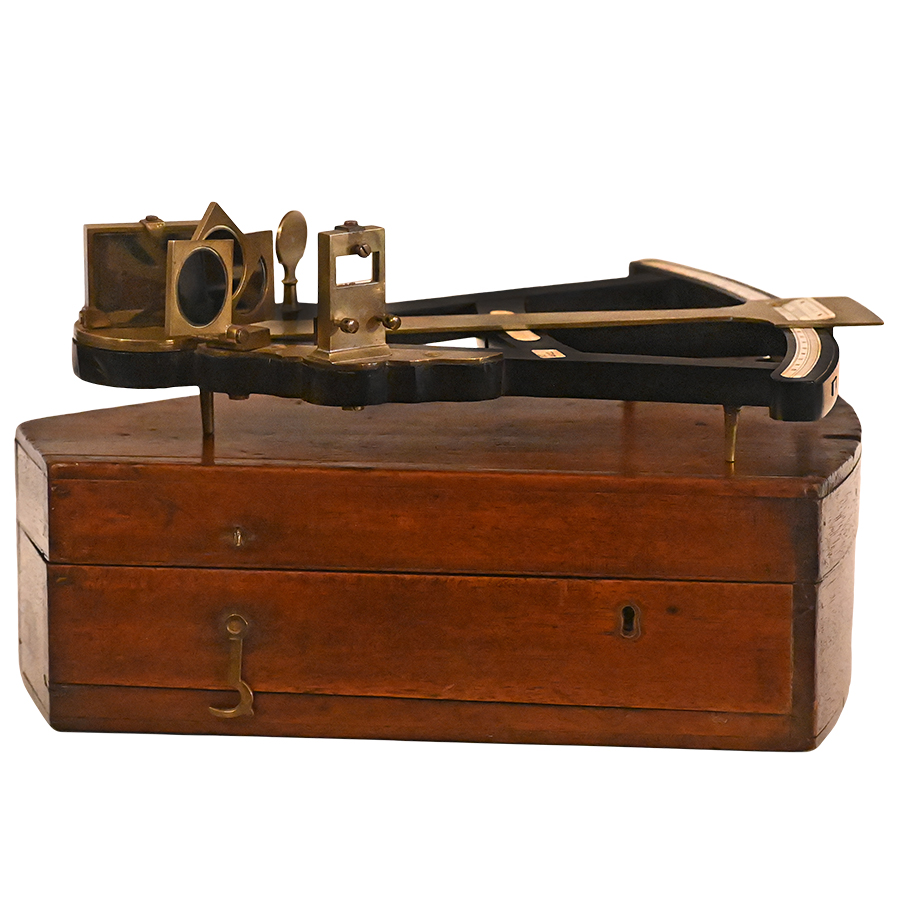
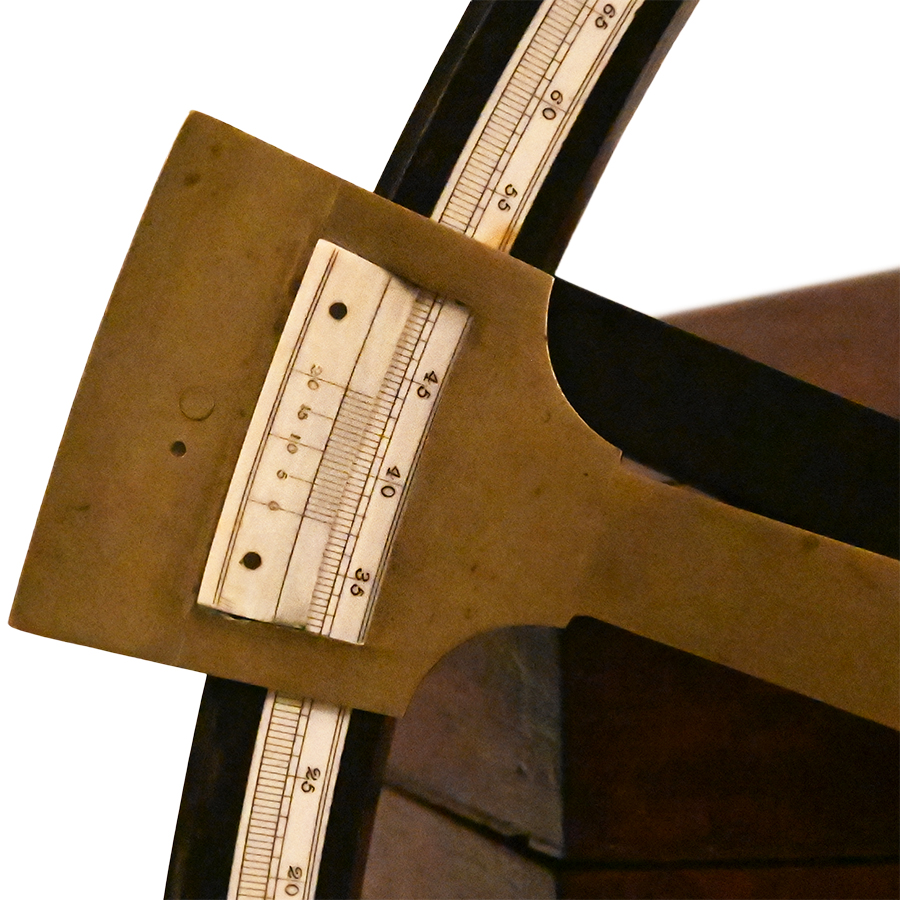
The octant features a traditional ebony frame fitted with a brass index arm and hardware, together with finely engraved ivory scales and vernier readings that allowed for remarkably precise measurements. The sighting assembly retains its period filters and mirrors, while a blank brass ownership plaque remains ready for a captain’s or owner’s name, a feature often found engraved on instruments of this quality.
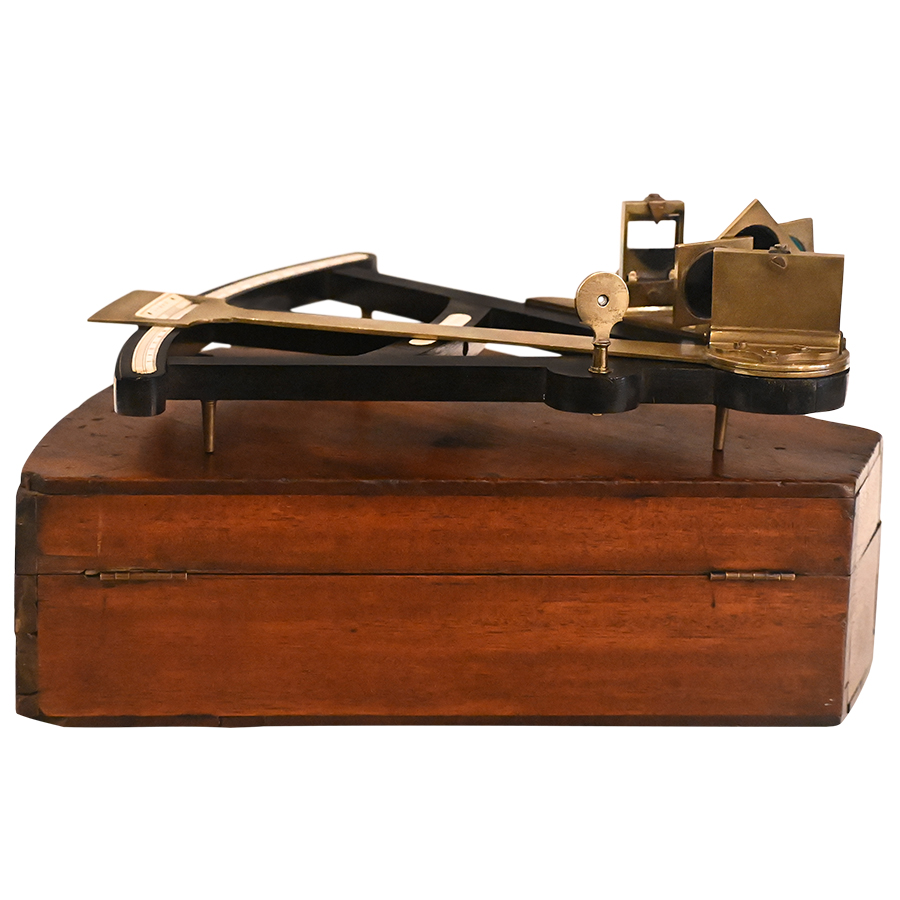
Equally appealing is the survival of its original fitted mahogany case, which protected the instrument during travel and storage aboard ship. The rich patina of the wood, combined with the warm tones of the brass and ebony, creates a handsome display piece while preserving the instrument’s authentic maritime character.
Both a scientific instrument and a tangible reminder of the great era of exploration and commerce under sail, this octant offers collectors an attractive and historically significant example of early navigational technology.
Case: 12.5″ x 12″ x 4″
Octant: 12″ x 10″
Circa 1830s
SKU: RJ WSC1 $2,450 Inquire